Showing posts with label 3D. Show all posts

Sunday, 6 January 2013

Loving Vincent's diary - 3rd week


BreakThru's producer Hugh Welchman (Oscar Winner for producing BreakThru's Peter and the Wolf) and painter/director Dorota Kobiela (director of BreakThru's Little Postman and Chopin's Drawings) are co-writing BreakThru's latest film, Loving Vincent, the world's first feature length painting animation film. The film is a mystery thriller looking into the life and death of Vincent Van Gogh, and is told through bringing over 120 of Vincent's masterpieces to animated life...

The script is on its fourth, and final, draft, and wth production scheduled for spring 2013, the pressure is mounting. This weekly diary will candidly record their process of writing the elusive final draft.

Loving Vincent's diary - 3rd week

So we spent yesterday - a day of dense golden winter sunshine- in the car, and today… the day of walking around Amsterdam… we woke up to a slushy blustery storm and a blanket of grey outside; again good traveller awareness! So it goes…

We braved the blustery rain of Amsterdam to walk the Van Gogh mile. The van Gogh mile is a nice idea: as the van Gogh museum is closed for renovation, and temporarily part of the exhibition is re-located to the Hermitage, a mile away, they strung a red line from the buildings and bridges for tourists to follow, and along the way you can stand on red dots on the pavement and listen to quotes from Van Gogh's letters looping on speakers attached to doorways/lampposts/windowsills. Additionally if you have an iPhone you can see some multimedia add on through the Van Gogh mile App. This was designed for sunny days! The wind meant it was hard to hear the quotes, juggling your iPhone and umbrella at the same time as putting earphones on and off is challenging. 

(Check out the Vincent umbrella!)


However there was an upside to doing it in these conditions. On a raining Sunday morning in November, with no shops open, central Amsterdam is utterly empty. Normally it would be bustling with tourists and people going about their city business. But at this time and in these conditions we were walking through these beautiful historic streets entirely alone, with only the sound of the rain, and Vincent’s words echoing across the streets. Pretty gezellig as the Dutch would say. There was some acceptable augmented reality add ons in the App, I am interested in augmented reality, but I am waiting to see one that has wow factor. Maybe we should do one for Loving Vincent,  I was thinking that after the Liege 3D film festival. We gained all this expertise in 3D (we have so far won 15 best 3D awards) and we aren't applying it to Loving Vincent. The film has to be 2D, for sure, but maybe we could do a 3D exploration, actually painted, where you go inside his paintings. I have seen something like that, but they were computer simulations, which just doesn't do it, it would need to be painted for real.

Finally we reached the Hermitage, and swum- with and against- the mass of people there. So many people that you have to bide your moments to get the view you want. Still having to wait patiently to be able to see a clear view of a painting from a distance gives you time to think, and to witness the absurd cat and mouse that goes on between the tourists and the security staff. There is a no photos policy here, which I understand if people are using flash, but I don't really understand if they are not. I can't think of any technical reason of how people snapping soundlessly, flash off, from their smart phones, harms a painting? Anyway a lot of the visitors seemed to agree; as soon as the Security guard turned to chase some other young girl lining up her phone, then everyone in the room whipped theirs out and snapped away. The sport of this seemed to preoccupy many visitors more than actually standing and looking at the painting! I kept my phone in my pocket and many thoughts came to me. Firstly my revelation of the day before was confirmed, that there was more depth in his work than you can appreciate from reproductions. The outstanding example of this was Undergrowth,

 http://www.vangoghmuseum.nl/vgm/zoom.jsp?page=3206&lang=en,  and surprisingly Still Live with Bible.


(source: wikipaintings)

The best thing about the exhibition at the hermitage was that you could look at the ground floor paintings from the balconies above, over the heads of the 1,000's of people. From this distance the Bible and table were actually there, you felt that you could reach in and pull out the massive grey tomb, or the battered much-thumbed Zola book perching small it at its feet. This painting was not the first that openly addressed his father's death. He had completed the haunting 'The Old Church Tower at Nuenen', but this was at Theo's suggestion, and he initially had resisted the subject. Still the result is very arresting, and you can sense the emotional depth in the painting. But 'Still Life with Bible' is the outstanding reflection on his father's demise. Six months after his father's death his mother asked Vincent to post Dorus's Bible to Theo, as their father had left it to him. A pastor's bible is a significant heirloom, and Vincent, the eldest son, was yet again forced to hand the baton on to his younger brother. Apparently the bible 'fell open' as he was sorting through his clutter on Isiah 53. By this time Vincent had gone full circle and was back to being an atheist, but during his period of religious fanaticism he effectively memorised the entire bible, and so he would have had no trouble in knowing just from sight of the heading what was contained therein: "He is despised and rejected of men; a man of sorrows and acquainted with grief". Vincent's position in Nuenen was getting past the point of being untenable, he was now under siege from all sides: long ago rejected by polite society; and since his father's death completely frozen out by his famil;, hounded by the catholic priests for immorality; pursued by creditors and shunned by the peasantry. In amongst this, he sat down, and in a day, by his account, painted a painting on a whole new level, that oozes emotion. The imagery is not subtle, with the heavy darkness of his father's bible, dwarfing, but not outshining, the ragged Zola tome at its feet, with a snuffed out candle standing to the side of the bible, but it is heartfelt, and for me in a day achieves more than months of working and re-working delivered in The Potato Eaters. (I have to say this is my personal opinion and Dorota along with the majority of art historians would disagree)

Other things that struck me, was transitions. Seeing the paintings in real-life you notice the smaller elements much more vividly: the falling leaves; the irises at the perimeter of a field. And there were at least two new characters that we wanted to add, not sure where or how, but they have to be added. First, the One Eyed Man…wow, this one passed me by. He looks like a crook from a Dickensian district, or a gangster from a film noir, and it is a great painting. For sure we have to get this shady character in there. In fact he was a fellow patient at the St Remy sanatorium, but maybe we can put him somewhere else, maybe Paris, he would fit among the brothels and cafes that Vincent frequented. All we have from Paris is the ex-muse/hooker turned club-owner/pimp-Segatori, whom Vincent got on the wrong side of, and the paint shop owner Pere Tanguy, who was reputedly a gnarled ex-communard, but looks more like a cherubic fat buddha in Vincent's painting. The second potential new character, is Camille Roullin, Postman Roulin's 11 year old son. Postman and his eldest son, Armand, feature centrally in our film, but now we should look for a place for Camille, as this is a fabulous portrait. Thirdly, Old woman of Arles, the first portrait in Arles, and perhaps the starting point for the greatest series of portraits by any artist. When I looked at this old woman I felt sure she would have something wise or mysterious to say about the little red painting fellow from the North!

This time I didn't spend much time in front of favourites like Wheatfield with Crows; Bridge in the rain (no idea how to get that into the film); the yellow house; The bedroom; Gaugin's Chair; Sunflowers; Almond Blossom; and Irises, as it was 1330, and we still had the ticking clock of Kroller Mueller, and the expired clock on our parking metre. We walked briskly to the tram stop, and saw our tram pulling out, we ran through the streets to see if we could catch it at the next stop, but it trundled along slightly faster than it was possible to run. Panting and red-faced we waited the 10 minutes for the next one. Our car retrieved, free of fines, we made a whistle-stop tour of the furniture shops on Overtoom, which had us salivating. I like Warsaw very much, it is a much under-rated city, but the fact that barren communism relinquished its hold on it only 20 years ago means that you just don't get the range of shops that you can get in places like London, Paris or Amsterdam. We can choose between Ikea and expensive imports that take weeks to pre-order. Half of our furniture came back with us from India. The furniture was cheap, but getting it into Poland was a nightmare, it was sealed up in customs because of dots and dashes that were out of place on our forms, and all the while I was being charged €30 a day rent for the privilege of the customs authorities completely unnecessarily rejecting my paperwork. Anyway you just don't get the same shops with great interesting furniture and fittings, reasonably priced, in the whole city, as on one block of that road in Amsterdam. And it turned out that some of the furniture in the shops was actually made in Poland. Made in Poland, but you can't buy it in Poland, the shop owner said he had a Polish couple come in and buy some furniture, made in Poland, and exported it back to Poland - you think given the fact that Poland is basically a building site, well all the roads and the major cities are, e.g.. in our block of flats out of 32 flats two thirds are currently being renovated, the dress code of my building is white or orange or blue overalls; and right now one of the main arteries in central Warsaw is closed as a second metro line is added; and construction of motorways and high speed rail links means that journey times are twice what they were (but with the promise of being half what they were and a quarter what they are)… anyway you would have thought someone in this thriving construction market would have sought to make it so you could buy quality Polish goods in Poland. Dorota, in amongst such innovative design, instantly re-imagined us going into import-export of the lights that we had just bought, which admittedly was incredibly cool, but I told the venture of Loving Vincent was quite mountain enough for us, and I just had to think of the customs impounding our India furniture to get shivers down my spine.

An hour behind schedule we careered off as fast as our plucky little car would take us to the Kroller Muller Museum. Still we arrived with an hour in hand. The Kroller Muller, looks like the hideaway of a bond villain, a low slung glass and brick building in a clearing of trees. There was a re-assuring graphic- VINCENT IS BACK- plastered over the windows by the entrance, but then the chief security guard was the spitting image of Odd Job (James Bond villain in Goldfinger), and eye-balled us as we passed, and I wondered if it was because we had arrived just before closing time, or if he did that to everyone. For a brief moment I imagined we were art thieves with some cunning plan to lift the goods from under the noses of the guards. We again by-passed a whole collection of magnificent art, not allowing even 5 seconds for this Picasso or that Gaugin, and bee-lined for the Vincent room.

Stunning… simply one of the most relaxing and wonderful ways to spend an hour. 40 or so of their 130 Vincent pieces were up, in simple wooden frames, against white walls. In the whole hour that we stayed in that room perhaps 4 other people walked through, and for a whole 20 minutes we were alone in the room. As you enter you find Madam Ginoux, M. Ginoux, Lieutenant Millet, Vincent, Mme. Roulin (Berecuse), and Postman Roulin all staring at you- that is half a billion dollars or so staring down at you! Heading left around the internal walls you have two walls dedicated to his dutch period. It starts with Girl in a woods, 1882. Mysterious, has something in common with the haunting Couple in the Woods from Auvers, painted just before his death, and while this early work is not a shade on the later work, still this is an intriguing painting. And then further back in time, with some paintings from the Borinage, and the one that I referred to in my first blog.

Not long after this his rough drawings gain a unique blockish style, and even though he still struggles with technically depicting the human form, he has worked through this somehow, and as a result he gained a unique style.

Vincent knew that his lack of formal training, his isolation from other artists, his late start, and even the fact that art-making just didn't come easily to him, as it did to the artists he crossed path with, many of whom are all but forgotten to history, at some level he knew that all of this wasn't necessarily a disadvantage. While still in Holland, he wrote: "As I have been working absolutely alone for years…I shall always see with my own eyes and render things originally."

Well moving around the square I arrived at a wall full of his later work. Wow, this was a real privilege, to sit down and have in front of you: 'Langlois Bridge', 'Pink Peach Tree' (the painting that Vincent gave to Mauve's widow discussed in Blog 2), 'Enclosed Wheatfield with Rising Sun', and in the centre of the wall, Terrace of a Cafe at Night. Each on of these is staggeringly affecting, interesting and involving, but 'Terrace of a Cafe Night' I think is deservedly the most famous. It is the first time he depicted a starry night; you want to hear know the conversation going on between the couple in the centre of the square, behind them, drawing you in, is a dark alleyway, out of which comes a horse and carriage, and also a lady in red is materialising out of the shadow, and in the middle a blur of ghostly green (?). The light from the night cafe dazzles, and when you get up close it looks as if he has actually carved it out of a block of yellow paint, it sticks out so much from the canvas, as do the stars, which look like they were squeezed directly onto the canvas from the tube- this bold thickness gives them their brightness. We had traversed half of a continent to get here, rushed from place to place, pushed our car, and ourselves, to our limits to cover everything in a weekend, and all on the first weekend that Europe descended into snow, but if for nothing else it was actually worth it just to be in that room. To see the rise and rise of a self willed artist from clumsy depictions to images that were part of a wholesale revolution in art, and which permeate to some extent into the visual consciousness of every one in North America, Europe and Japan. perhaps as interesting as witnessing the progress of his draftsman hand, which gained considerable craft and skill over his short career, you can also see his subjects by contrast were the re-hashing, re-expressing, re-rendering of images, ideas, literature, and ideals that he had held onto dearly in his former lives: as a boy living in nature; as a preacher's son; as a young dapper art dealer; as a boarding school teacher; as a religious fanatic, and finally as an artist. Images such as the reaper, the sower, the church spire, the worn out shoes, and the man of sorrow (Isiah 53). On adjacent walls at the Kroller Muller they had a drawing from 1882 and a painting done perhaps 2 months before he died.

(source: wikipaintings)

He was someone who had something he wanted to express, and what he wanted to express remained remarkably consistent even as his style evolved; and shortly before his death he actually found the means to express "it". Why after a life time of struggling to express yourself and communicate with the world, why would you, when you had just found the means to express what was in your heart to the world, would you then, at that point, choose to kill yourself?

At that point Oddjob, and seven other guards swept into our room and, for the last time on this trip, we were escorted from the premises, the last people in the museum. By the time we had reached the end of the path the museum had been shut down, and we were in the darkness of a winter forest. This is a special museum. The building is spacious, allowing you to really absorb what is around you, the collection is phenomeal, Mrs Kroller Muller had a limitless account and an artists eye, and the fact it is in the middle of a forest, a whole hour outside Amsterdam means it is often over-looked. I kicked myself for being one of the many who over-looked it on previous visits to Amsterdam; in the future I will make at least half a day to stop by this museum if I visit Amsterdam.


Our Journey had given us new energy for our endeavour, and had exposed us to new ideas for the film: new paintings that we want to include and new ideas for developing our visual approach. But it shed no light on the biggest mystery of all, the mystery surrounding his suicide, in fact quite the opposite, it made it even more unfathomable. This would be something we would have to grapple with back on our building site. We climbed into our car and started out on the 1,400 km drive back to Warsaw.

by Hugh Welchman


Tuesday, 25 December 2012

Loving Vincent's diary - 2nd week (2/2)


BreakThru's producer Hugh Welchman (Oscar Winner for producing BreakThru's Peter and the Wolf) and painter/director Dorota Kobiela (director of BreakThru's Little Postman and Chopin's Drawings) are co-writing BreakThru's latest film, Loving Vincent, the world's first feature length painting animation film. The film is a mystery thriller looking into the life and death of Vincent Van Gogh, and is told through bringing over 120 of Vincent's masterpieces to animated life...

The script is on its fourth, and final, draft, and wth production scheduled for spring 2013, the pressure is mounting. This weekly diary will candidly record their process of writing the elusive final draft.

Loving Vincent's diary - 2nd week (2/2)

Thankfully I have rarely suffered from hangovers, so I woke up at 9am, leaving Dorota to sleep it off a bit more and went and bought myself some clothes, seeing as we didn't have our washing machine plumbed in yet back in Warsaw, and I hadn't got around to going to launderette, I had to buy my clothes for the trip ahead. And of course my winter clothes were in the wrong city anyway, so I bought the cheapest hat and gloves that H&M had to offer.  

When we finally assemble all our stuff from the various studios, friends and relatives I'll probably realise we need to re-renovate our place with more storage. My itinerant life has been for three years, prior to that I moved only twice in a decade; Vincent was itinerant his whole adult life. But when he left a place it was often very abruptly, leaving his stuff behind, with a retinue of angry creditors making a return unlikely. For sure there were scores of early Van Gogh drawings and paintings that were left behind, and probably broken up and sold for wood by the creditors he fled from… amazing to think if they had just left it in their attics their children would have become multi-millionaires! This is to add to the Van Goghs destroyed in wars; stolen; and the one- a portrait of Madame Ginoux that Vincent set out from the St Remy Asylum on day release to give to her, but when he was found in the streets of Arles, dazed and confused, he was without the painting. Just imagine unearthing one of these after 125 years!! The nearest I have heard to something like this is the Finnish Department of Foreign Affairs. One of their junior employees in the French embassy was tasked with going out and buying some art, he came back with two Van Goghs, which appalled his conservative superiors, so he got demoted, or fired, or moved, and the two paintings sat in the attic of the Finnish embassy for 30 years, until someone realised they had two insanely valuable paintings rudely stacked among bric a brac. 

 Acceptably clad in clean warm clothes we struck out into the white grey gloom for Holland. Obviously Liege didn't want us to go, either that or I was over estimating my morning lucidity as we managed to re-enter the city twice before finally striking out on a long straight white road instead of the motorway (which was clogged with standstill traffic). The road was virtually empty, dissecting barren white fields. It was a relief to enter a forest, where all the branches bent ominously under piles of fresh wet snow. We passed Neunen, but decided that another standstill motorway was sufficient to deter us from seeing the place where Vincent spent more time than any other during his years as a painter, and the only place he didn't leave abruptly. This was where his ageing father had been sent, to preside over a small protestant community in an overwhelmingly Catholic village. His father and the parsonage were at the centre of the community, but this was disrupted by the arrival of the eldest son, who by now was an avowed atheist; who insisted in dressing in peasant clothes; and who would accost anyone he saw to come and model for him. At this time he worked furiously to master drawing, but also developed as a painter, painting what is heralded as his first masterpiece: The Potato Eaters. While he felt this was a breakthru, and he sent copies of it to many people who he wanted to impress, many of who had abandoned him, and in whose eyes he longed to be redeemed. But no one seemed to see what he saw, his friend van Rappard, put it:

 "Why do you see and treat everything so superficially? How far from true is that coquettish little hand of the woman in the background… And why isn't that man to the right allowed to have a knee, a belly and lungs? Or are they located in his back? And why must his arm be a yard too short? And why must he do without one half of his nose? And why must that woman on the left have some sort of little tobacco-pipe stem with little cube at the end for a nose?"

The friendship was crushed, as many of Vincent's friendships with other artists were, by bitter invective. van Rappard has a point, but as Vincent retorted, he also misses the point. And van Rappard's work is now a footnote in art history, mentioned only for his interaction with Vincent. Rappard was not the only one to scorn The Potato Eaters; his brother Theo rallied an array of criticism from himself, backed up by other artists and dealers in Paris. Wounded, but still belligerent Vincent conceded his figures were crude, but said that it had spirit and a life that would shine through:

 "I should be in despair if my figures were good rather…everything depends on how much life and passion an artist is able to express."

 On Sunday we would get to see this at the Van Gogh Museum but first we had to find out what was at the Hague. I was still getting stick for being stubborn and making us go to the Hague when there was only one van Gogh there. We arrived in the Hague to find the Maritshaus museum …. closed for renovation!!! What is going on - the van Gogh Museum, the Rijks Museum Maritshaus, all at the same time? What is so special about 2013 that they all need to be re-vamped for, or maybe the staff just want to party before the end of the world? Anyway precious museum time was being lost: did you know that museums in Holland close at 5pm (!?) as someone who has mainly visited art museums in London and New York this seemed seriously anti-social, and for the whole trip we felt like we were breaking land speed records to make it in time for closing. So onto Gementemuseum, with a time limit of 30 minutes. We went straight to see the three Rembrandts. One of his early works, that made him famous, 'Anatomy lesson of Dr Nicholaes Tulp', was flanked by two paintings from three decades later, towards the end of his career, 'Homer' and 'Two Negroes'. To be honest I wouldn't have given Anatomy Lesson a second glance if Dorota hadn't told me it was so famous, but even with my walking painting encyclopedia next to me, I had trouble studying it… when the other two are just so fascinating - the lighting in these and the way it is painted is impressionistic, counter to the realism of the earlier work, both early and late work have amazing lighting, but the later ones are dark, mysterious: something you can get lost in. There was no time to dwell on anything else; we scoured the rooms in search of the sole Hague van Gogh. Embarrassingly we both walked right past it, and had to have it pointed out to us: 'Garden At Arles', 1888.

 My heart sank; I had siphoned time away from museums with 100's of van Goghs for this.... It seemed a bit of a mess, not one of his great paintings, not one of the great Arles landscapes. I walked away from the picture, and turned to give it one last look… and from a distance it looked totally different. I was standing on the right of it facing it, at 10 metres away, and the painting… came alive. The path drew me in, the perspective was deep and intriguing, the staccato multicoloured brush strokes that seemed unnecessary up close cohered to give you the feeling of an over-flowing garden shimmering under intense summer sunshine. It brought a smile to my face. One thing I couldn't bear to, or afford to buy, was new winter boots, as I bought a very nice pair last year, so I had been walking around for the whole trip with my feet soaking in my summer trainers, and here- looking at this- I felt like I could walk down the path and be enveloped by cicadas and Mediterranean heat.

 As I am writing this, I am looking again at the painting on line: http://www.googleartproject.com/collection/gemeentemuseum/artwork/garden-at-arles-vincent-van-gogh/432790/ and it is just not the same painting. Here it is in high resolution courtesy of the Google Art project, but for this painting, well it seems almost pointless in reproduction. And that is the thought that I took away from the Hague. I have been looking at all his paintings in books, by necessity, and in books you miss the texture and you miss the depth/perspective in his work. This trip started with a reminder of the lengths that we went to achieve depth and perspective in our last films, winning the top prize for use of depth in film, and here I was struck by the unexpected and transformative depth in the first Van Gogh's painting that we had seen on this trip. I would be sure to be looking out for this on the rest of the trip. 
 A minute past our curfew, we raced back to our illegally parked car and drove furiously to Rotterdam under a glorious heavy orange sun, calling ahead to the museum to check they wouldn't close on us. When we arrived half an hour before closing they kindly decided not to charge us, and directed us to the van Gogh's. After my depth revelation we looked at the decidedly flat, portrait of Armand Roulin. And I was rather disappointed that it was the three quarter profile Armand, rather than the head on one of him in his yellow suit that we use in the Concept trailer. I am also influenced by the fact that I love our Amand Roulin character in the film; he will be the narrator for our film sequence that we are planning to use for Kickstarter- 'The Ear'. So I left Dorota to studying it carefully and moved on to the next ones. 

They had poplars near Nuenen, a painting I liked very much, mainly because I thought it was dramatically useful for the film. 

(source: wikipedia.org)
 It is from 1885, and I wondered from when in 1885, whether it was after his father's death in March of that year. Centre of the picture is the church spire in black silhouette, and under it in the foreground two women in black, and of to the side of them a man in peasant blue overalls, Vincent's default clothing at the time, who is holding some unidentifiable white stick in his hand. And it is an avenue of poplars, a tree that signifies loneliness, artisticness, and lacking in confidence... Could it be symoblising that he has lost his way in the wake of his father's death, and the black figure is mother and sister who turned their back on him, and all is dominated by the dead pastor, in the form of the silhouetted spire at the heart of the picture? Maybe the unidentified white is a blind man stick- symbolising Vincent's blindness. I have to check the date of the painting, and also whether I can find any references in his letters to the paintings, or to poplars, and check when the white cane first started to be used. Whether I am finding symbolism that isn't there, this painting has great dramatic potential for Vincent's departure from Nuenen in the film; and the fact is that most of Vincent's subjects were highly symbolic and much related back to his family, his mother's love of nature, and his father's religious teaching. 

1885 was a key year for Vincent. On the one hand he was super prolific, and had the breakthru of the Potato Eaters, on the other hand his relations with his family deteriorated disastrously, and the sudden death of his father made things worse, as his mother and sisters in part blamed him for the death of his father. Vincent had terrible and violent rows with his aged father, and to a lesser extent with his mother and sisters. He desperately wanted their love, as you can see from his letters when they are apart, but in these two years he railed against the views and authority of his ageing father- openly drinking, whoring, declaring his atheism, trying to tear down his father's world view- even as his father was bemusedly trying to understand and accept his son's chosen vocation, one that produced no money, just sucked it out of the family at an alarming rate. After his death he was hounded out of home by his sister and mother, and… would never return home or see them again. Once again he was leaving a place under a cloud, but not just any place, he was leaving the family that he so wanted to be loved by, for good. But... he was leaving as a painter; the die was cast. 

The one painting where there can be no doubt of its symbolic meaning, painted just after his father's death, is Still life with a Bible. This would be a treat for the following day. 

Having lost myself in thoughts on Poplars near Nuenen, we then used the final minutes to scout around the gallery. I was struck by the work of the Hague School, especially a large painting by Anton Mauve, the star of the Hague school, who was an uncle to Vincent by marriage, and who can be credited as the man who persuaded Vincent to paint. Until his apprenticeship to Mauve, Vincent was completely set on being an illustrator. Inevitably they had a seismic falling out, but Van Gogh always thereafter sought Mauve's approval, which was never forthcoming. When Mauve died Vincent sent him 'Peach tree in blossom' to his widow, and Mauve's granddaughter, three decades later, sold this for a hundred times more than the highest selling of her grandfather's paintings. I only knew Mauve through his role in Vincent's story, I had never seen his work, so I was surprised to be very struck by his paintings. While he might have been chained to the dealer system, his paintings were often pre-sold by Tersteeg (Vincent's nemesis), who harried him for as many paintings as possible, churning them out for the American market, he is someone with sensitivity and passion for his work. The Hague school duly visited, we had 30 seconds to admire Pieter Bruegel's the tower of Babel. Too short, a great affecting image whether on a postcard or on the Internet; it was a complete treat to see the actual painting, even for under a minute. Not for the first or last time on the trip we were escorted from the premises!!!

(source: wikipedia.org)

 by Hugh Welchman


Monday, 17 December 2012

Loving Vincent's diary - 2nd week (1/2)


BreakThru's producer Hugh Welchman (Oscar Winner for producing BreakThru's Peter and the Wolf) and painter/director Dorota Kobiela (director of BreakThru's Little Postman and Chopin's Drawings) are co-writing BreakThru's latest film, Loving Vincent, the world's first feature length painting animation film. The film is a mystery thriller looking into the life and death of Vincent Van Gogh, and is told through bringing over 120 of Vincent's masterpieces to animated life...

The script is on its fourth, and final, draft, and wth production scheduled for spring 2013, the pressure is mounting. This weekly diary will candidly record their process of writing the elusive final draft.

Loving Vincent's diary - 2nd week (1/2)


The idea was to have a trip to shake things up, get us out of our internimable renovation. Go and accept an award, and hopefully have a night celebrating past films, and then go and see a lot of Vincent paintings in the flesh to inspire us for the present film. 
A day into our trip it was clear we had fallen out of our traveller mentality. In 2010/11 I was on a trip virtually every, week, we lived out of suitcases, at one point I had meetings in India, China, Los Angeles, New York and London on consequtive days… well this time we set out from Warsaw to Liege at 9pm without checking the weather, or really comprehending the distance. We were greeted blizzards, sleet, hale and driving rain. 21 hours later (with 6 hours stop-over for sleep) we arrived in moody Liege. On the way Dorota read to me about Vincent's time in Wallonia, west of Liege in the Borinage- the 'black country', where he had the blackest of times.

Vincent from 23 to 27 was falling rapidly. Spoon fed a position when he was 16 at his childless Uncle's art dealership, and whom Vincent had been strategically named after, it was expected of Vincent that he would in time succeed his Uncle… but, by 23 he had, despite his famous name and connection, been demoted repeatedly until he found himself tucked away on the periphery of the firm, in a storehouse in London. He increasingly lost himself in evangelical religion, and decided to dedicate himself to religion. A couple of other career dead ends later, his family supported him to became a pastor like his father and grandfather, but Vincent didn't have the aptitude for the rigorous academic training it required. So again he slipped down the options of religious academia, and all that he could find was a post as an evangelical preacher in the mining district of the Borinage in Southern Belgium, an area that had the worst mines in Europe. Vincent had no talent for preaching, his sermons were convoluted and overlong, and barely comprehensible in his accented French. He was ostricised by the tightly knit mining community, which drove him to express his devotion symbolically, giving away all the church's possessions to the poor, sleeping in a barn, and eventually walking around in winter naked, having given away his clothes. Neither the miners nor his church appreciated this and he was locked out of his parish. So at 27 he suffered the indignity of having his father come and retrieve him and take him home, exactly 10 years after he set off in his dapper suit to follow in his Uncle Vincent's footsteps and become a great Art dealer.

It was here in the despondant depth's of depression that he started drawing. His mother and sisters dabbled in drawing in a purely recreational way, and they encouraged this in him, as a way to distract him from his black slumber…. and it started to work. Out of the blackness Vincent started to see a flicker of a future as a draftsman, an illustrator. Vincent was prone to herculean obsessive work. And where religion had resided, art took root… and he would draw through the night each night every night. The first drawings were …. awful, here is one of the few surviving drawings from this time, but he thought with single minded dedication he could conquer drawing, he could find through art a way to expressive this thing…

 (source: wikipaintings.org)

... to express 'it'… the truth and beauty that he had always felt he was able to feel and see in the world, and wanted to express to the world. If he couldn't do it through words as a preacher, then he would do it through images as an artist.

And with that chapter concluded we arrived in Liege, got booted and suited and headed to the Liege 3D Film Festival award ceremony.  The ceremony was much glitzier than I had expected. Set in the recently rennovated and luscious Liege Opera House,  and a whole array of awards sparkled under the lights. I knew we were picking up three awards, half way through the ceremony Little Postman won the award for Best 3D Animation. I winced when they called my name instead of Dorota's, as Dorota, having travelled around to many events with me was looking forward to having her moment at this one. We both went on stage I was handed the mic, and stated that as the director Dorota should really talk on behalf of the film. I handed her the mic, and then immediately wished I hadn't… We were at Europe's, if not the world's, premiere 3D festival, and she opened with "I wanted to make this film in 2D, as I don't really care for 3D…"


However I didn't need to be nervous, she went on to make a charming speech. She stated that it was only because her producer (me), who is also her husband (still me), told her to do it in 3D, and as she always does what her husband tells her (that was made up), that she made it that way, but she was very glad that she had, as the technology opened new artistic possibilities. She raised more laughter and applause than any other speaker of the night. She sparkled in the attention and I felt glad we had trekked across all of Europe to pick up the prize. I was told we were getting 3 prizes, but I thought there must have been some mistake as the night went on and there were only two awards left on stage. But to my surprise, the last two awards, the most prestigious, Best Stereography (Best 3D) and Best Film went to Magic Piano. Dorota came up with me, and we continued the double act speech.

Ceremony over, attention turned to partying. Things started tame in the exquisite ball-room at the Opera house, from there a whole group of the awardees were taken to a shiny club by the organisers.

(source: crowneplazaliege.be)

We were tired after the 20 hour drive, and were in two minds as whether to stay, but then someone made the one-way decision of multiple bottles of Vodka and red-bull… it'd been a while since I had ventured near this drink, as last time I had a night on it I felt wired for 3 days, but I'd been living off caffine to get across Europe anyhow, so… why not? We plunged into a night of dancing and drinking, that spilled on into a seedy club when the shiny one closed. We were hustled in through a hoarde of street drunks that hung out on the margins of a night, rather like the patrons of Vincent's night bar. In the bustle a young man got cut below his eye by the wing of one of the awards I was carrying. I bought the guy a drink and apologised for the accident. For the rest of the night he was always hanging at the margins of the group. At each place we all left our awards behind the bar for safety, but the last place turned out not to be very safe. When we left at 4am two awards were missing… both the Magic Piano awards. Dorota's was there, all the other people's prizes were there, it was just the Magic Piano awards. Our hosts got into a heated exchange with the bar owners, shirts were ripped, tempers were frayed. It was a sleezy last refuge, and I thought the young man that had been hovering in the corner of my view was probably the culprit. It was just the kind of place Vincent in his drinking insomniac phase would have ended up:

"It’s what they call a night café here (they’re quite common here), that stay open all night. This way the night prowlers can find a refuge when they don’t have the price of a lodging, or if they’re too drunk to be admitted."

I tried to get everyone to step back, but with that much red-bull and with the young bar staff as drunk or high on some drug or other, it took time to fizzle out. I reassured our hosts that this theft in no way coloured our night. It was a very special night, full of excitement and glamour, appropriately descending into the seedy backstreets of Liege, but instead of us observing the "little hooligans and night prowlers" as Vincent did in one of his truly amazing paintings, The Night Cafe, we were the ones being closely observed by the night prowlers and little hooligans. So….


...we headed to bed at 4am in possession of one instead of three exceedingly heavy golden winged statues, and with 6 hours before we had to set out for Van Gogh museum.


 by Hugh Welchman


Wednesday, 12 December 2012

Loving Vincent's diary - 1st week


BreakThru's producer Hugh Welchman (Oscar Winner for producing BreakThru's Peter and the Wolf) and painter/director Dorota Kobiela (director of BreakThru's Little Postman and Chopin's Drawings) are co-writing BreakThru's latest film, Loving Vincent, the world's first feature length painting animation film. The film is a mystery thriller looking into the life and death of Vincent Van Gogh, and is told through bringing over 120 of Vincent's masterpieces to animated life...

The script is on its fourth, and final, draft, and wth production scheduled for spring 2013, the pressure is mounting. This weekly diary will candidly record their process of writing the elusive final draft.

Loving Vincent's diary - 1st week


This week was the first week that we took the first concrete steps towards the new (and final) draft. The warsaw office/flat rennovation has been eating away at our time, finishing a flat that has to be an office for us and our colleagues, welcoming to clients, and a place to live shares some attributes with writing: 
- you find that a little thing that you are sure will be done in a few minutes sucks away at a day;
- you get carried away on an idea that ends with you exhausted having re-arranged everything at 8 in the morning;
- you find there is a little corner that gets you unstuck and threatens to unravel everything, and;
- the thing that you cherish just doesn't fit, and has to be thrown out.

But this week the balance shifted and Vincent re-entered our lives: on the night of our 2nd wedding Anniversary. After a day of rennovation work we went out for a late meal around 10pm and a frivilous meal turned serious at the digestif stage when we started to go through photos of our first two years of marriage: we discussed our hopes and fears for the future, and it turned out anxiety about the final draft of the script loomed large… so we decided to do something about it there and then: and started reading through Vincent's letters; and then watched a film on Caravaggio; and finally at around 5am started to brainstorm new approaches to the film, acting out a new opening sequence.

In the days after our main preoccupation was to see if there was a character in his life that could take on the investigative role in the film, provide some frame narration, and also looking at upping the mystery without jettisoning the link to our research. Basically lots of discussion and several new pages written, but no decisive breakthru. We did write a concept for our Kickstarter Video, so we will shoot a dummy run of that the next time we are in the Gdansk studio.

Still... by week end the idea of the week was the one that came at 5am on our wedding anniversary night, that seems to be the only one destined to make it into the film! So… by Friday we were drained of ideas and frustrated. The very next email that arrived gave us the news that our films Magic Piano and Little Postman had both won prizes at the Liege 3D Film Festival and would we be able to come next week and accept the awards. Dorota has never picked up in person any of the 5 first prizes that Little Postman has won, and I have never picked up any of the 5 that Magic Piano has won, and I had been looking for an excuse to go to Holland anyhow. So I looked on the map- 10 hours drive to Liege, and from there one hour on to the Borinage, the place Vincent was a preacher to the miners, and then 2 hours up to the museums in Holland. I decided this is what we needed - to get out of this flat, pick up the prizes and then go an immerse ourselves in Vincent paintings for a weekend. We were sitting at the coffee table by our new book shelf researching all the Dutch museums that have Van Goghs. We looked at the route this would take us, and decided it was too full on. So I remarked "Do you think the paintings in the Hague are worth bothering about", at which point our Vincent books, 12 out of several hundred, clattered onto the floor just behind us… all the other books were unmoved. We looked at each other bemused, and decided that obviously someone disagreed that the Hague paintings weren't worth bothering about, and put the Hague back into our itinerary. Had Vincent entered our lives in more ways than one?

Here is a picture of the books on our perfectly level shelves! What will we find in the Hague?

 by Hugh Welchman

Friday, 6 July 2012

Bringing legends to life...

BreakThru Films are currently preparing their own version of the Cúchulainn legend, one of Ireland's most popular mythological tales drawn from the Ulster Cycle. We look back at a few of the most famous and infamous attempts to bring a legend to the screen...


1. Beowulf (2007)


Ray Winstone as the Old English hero
With a script co-written by Neil Gaiman and Roger Avery and the direction of legendary Robert Zemeckis, this mega-budget motion capture blockbuster proved to be an unexpected hit that was far smarter than early previews had suggested. Based upon the famous Old English legend of the Danish hero who wrestles with the hideous monster Grendal and his even more hideous hag of a mother, the film managed to skirt the dead-eye Uncanny Valley problems which had haunted Zemeckis's Polar Express to provide a gleefully silly but also visually impressive tribute to one of the English language's first recorded texts.

 2. Excalibur


John Boorman directs an Arthurian classic which melds together a number of classic tales with a fast-paced and violent tale of magic and chivalry. A story which had been mined for comic effect by films such as Monty Python and the Holy Grail was here treat with deadly seriousness, and the result was one of the most spectacular and timeless fantasy films of the 1980's.

Nigel Terry retrieves the legendary sword...
The film was shot in Ireland, and though it achieved a modest critical and box-office reception, it gave a much-needed injection of interest for the Irish film industry. The beautiful location work and the lush green scenery proved to be extremely attractive to filmmakers keen to recapture the mystical atmosphere of lost ages.

 3. Clash of the Titans (1981)


Before the pitiful 3D remake came the classic original, featuring some of genius Ray Harryhausen's finest stop-motion work. The legend of Perseus, the first of the great Greek heroes, provided the inspiration for the film, which sees him battle giant scorpions, defeat Medusa the Gorgon and rescue Andromeda from the Kraken.
Medusa with her hair of stop-motion animated snakes
A sequel was promised, but by the time Clash of the Titans was finally released the world had moved on from the combination of swords and sandals epic and Harryhausen's animation style; the popularity of films such as Star Wars had whetted their appetite for more 'sophisticated' special effects. Today, however, his work is rightly lauded as truly revolutionary, with the effects he created for Clash ranking among some of his very best.

4. Gladiator


Based on segments of the late-Roman collection of biographies the Augustan History, Ridley Scott's Gladiator turned the history of Commodus into a bloody epic in which one man struggles to regain his freedom against a backdrop of inequality and inexcusable cruelty.

Oliver Reed resurrected for Gladiator
Russell Crowe shines as General Maximus Decimus Meridius, who is reduced from proud general to abused gladiator, and fights to overthrow the tyranny which has betrayed and felled him. With a mixture of spectacular grand guignol combat sequences and the revolutionary use of computer generated effects to sketch in not just the rampaging tigers unleashed in the ring but also to patch in the face of Oliver Reed, who died part way through production and was replaced in his final scenes with a CG simulacrum!

- BreakThru Films

Saturday, 7 April 2012

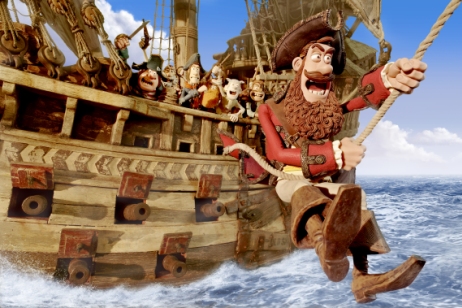
Pirates!, Aardman and the power of mixed-media animation

The Pirates! In an Adventure with Scientists is well on its way to being a box-office smash, and shows the brilliant Aardman Animation at their very best, but it's also a significant technical triumph, and a great demonstration of the strength of blending classic stop-motion techniques with cutting edge computer technology.
The Pirate Captain prepares to board...
Filled with the dry wit, hilarious visual gags and good-hearted adventure that has made Aardman Britain's leading animation studio, The Pirates! In an Adventure with Scientists was released in the UK last week, and looks sure to be as much of a hit with audiences as with critics. Based on the first of a series of comic novels by Gideon Defoe (hence it's idiosyncratic title, which would sit much more comfortably on a bookshelf than a cinema hoarding, and which is being changed to the more manageable The Pirates! Band of Misfits for its US release) it also has the potential to become a sizeable franchise.

If it does, then its success will be well-deserved. The Pirates! is a gleeful piece of swashbuckling family entertainment, every frame stuffed with brilliant jokes that demand a second or third viewing and a fantastic cast including a star-turn by Hugh Grant as the hapless Pirate Captain and the incredible Imelda Staunton as a pirate-hating Queen Victoria. It also has a winning script which refuses to talk down to its audience, keeping the parents interested with cameo appearances by the Elephant Man and Jane Austen rather than cheap 'adult' humour.

Perhaps best of all, and easiest to pass over, is its gorgeous animation, which manages to stay true to the stop-motion which made Aardman's name in the 1980's and 90's while providing eye-bursting 3D and seamlessly introducing a variety of computer generated landscapes and effects. 

It's not Aardman's first foray into mixed-media animation: the apparently 'home-spun' Wallace & Gromit in the Cure of the Were-Rabbit involved the participation of leading post-production company MPC Films, who provided a plethora of computer generated bunnies to 'bulk out' those created by Nick Park and his team.
Can you separate the CG bunnies from their plasticine cousins?
I'm not sure we can...
In The Pirates! however, Aardman incorporated mixed-media techniques throughout the animation process. Computer generation was handled in-house, made possible by Aardman's earlier experiments with computer generated animation for their modestly successful all-CG collaboration with Dreamworks, Flushed Away. As so much of Pirate Captain's adventures take place on the water, a famously time-consuming substance to work with in traditional stop-motion, it naturally suggested the full-on incorporation of computer generated visuals. 

The ocean swells, the sweeping vistas of Victorian London and a host of other elements have been rendered digitally rather than in-camera, and it is a credit to the skill of Aardman's team that the effect is never jarring. Aardman have essentially updated an intrinsic principle of animation, in which the background is 'pre-rendered', whether this means painted onto a single surface or onto multiple panes of glass as in many of Disney's most lush environments, while the characters are animated by hand and overlaid. Here it was the motley band of pirates and their (not very sea-worthy) ship that were superimposed over the computer generated environment using green screen.
Animators work to blend the set and characters into the
computer generated ocean environment - here Charles Darwin
is readied to walk the plank into a digital ocean
It doesn't stop there, the animation has also been rendered in highly effective 3D, and contains numerous moments which imitate traditional cell-animation. These include the comic travelling sequences, in which the pirate ship careers around a map, leaving a confused trail of red dots as it ricochets off cherubs and is blown around by baroque zephyrs. The result is a technical palette which pays homage to great animations of the past, contains a visual style which is definitively 'Aardman-esque' (all ping-pong ball eyes and letterbox jaws) while also allowing for spectacular set-pieces. Most importantly of all, the various techniques compliment one another, rather than creating incongruities.

Mixed-media animation is something BreakThru Films feel very strongly about, so we'll be cheering The Pirates! on to success when it opens in the US later this month. Our current projects, and particularly the short animations created for Chopin's Études, have been created with a wide variety of technical processes, blended together to create visually distinctive films which are both aesthetically powerful and technically progressive. The Flying Machine sees live-action blending with computer generated graphics and 3D stop motion animation, continuing a lineage which extends back through Who Framed Roger Rabbit, Mary Poppins and beyond.
Our stop motion animated Flying Machine against
a computer generated vista
We're also very excited about Scarecrow, which has recently been selected for the BeFilm 2012 Underground film festival in New York at the end of this month. It's to be shown in 3D, as intended, and we hope it can demonstrate (as The Pirates! does) that 3D really can be the future of animation, if studios have the confidence to develop their films in true-3D, rather than simply slapping on the effect in post-production to increase box-office revenue. Used effectively, in collaboration with the other animation techniques, it can be spectacularly effective and moving.
Rotoscoping, a technique which has been used since
the birth of animation, gives
Scarecrow a real sense
of living history
Scarecrow uses a combination of traditional animation, rotoscoping and 3D computer generated graphics to tell the story of a fallen soldier in Poland's November Revolution. The rotoscope technique allowed the animators to bring the startling paintings of Polish painter Jerzy Duda-Gracz to life, creating an aesthetic that at once stays true to the era Chopin evokes, while at the same time involving the work of one of Poland's most significant modern artists. As the story progresses and the soldier's soul seems to rise up from his broken body, directors Przemyslaw Anusiewicz and Janusz Martyn begin to introduce 3D computer generated elements, strange cloaked figures which dance above the marshland like animated shrouds. Viewed in 3D, it is an effect which simply could not be achieved with traditional animation, a true example of technology making the impossible possible.
Computer generated animation brings a more haunting aspect of
Duda-Gracz's art to life in striking 3D
Whether allowing pirate ships to spring forty feet above a crystal-clear ocean, or bringing a haunting vitality to some of Poland's most beautiful art and music, mixed-media techniques are keeping animation at the cutting edge of film-making. The sense that an animated film can embrace a wide variety of technical forms is one which keeps it fresh and responsive to innovation and creative thinking.  The days in which stop-motion or traditional animation and computer generation were seen as mortal enemies, with the latter poised to consign its frame-by-frame predecesor to the dustbin of history, are thankfully far behind us. At BreakThru we're constantly looking forward to the next advancement, and as Aardman's Pirates! seem poised to storm the US box office, we're proud to be among such illustrious company.

-Stewart Pringle

Follow the BreakThru Films blog for future articles on some of the revolutionary techniques that we;re developing for upcoming projects. Except the ones that are too secret to show you yet...shhh!


Thursday, 5 April 2012

The Flying Machine - a multi-platform adventure

BreakThru Films founder and producer of The Flying Machine Hugh Welchman explains that the way we tell stories is changing all the time.
The Flying Machine will be taking off in more than cinemas
Our aim with The Flying Machine is to make a film that will push the boundaries of family animation, and for the range of products across different platforms that we are currently developing to be the first phase of the creation of an enduring franchise. We are in a period of massive change in the way that people are accessing and interacting with stories, music, art and games. Technology is not only changing the way we consume stories, it is changing the way stories are told.

BreakThru Films is all about delivering multiple entertainment and educational experiences across a range of platforms, traditional and new. The combination of cutting edge live action, amazing computer generated visual effects, state‐of‐the‐art 3‐D technology, Chopin’s timeless composing and Lang Lang’s kinetic piano playing, will create a truly moving and entertaining film for families of all ages.

The core iconic element across all delivery platforms is the flying machine itself. In the beginning nothing but a discarded piano, but when children discover it in moments of distress it transforms into something magical ‐ in the vein of Jules Verne and Hayao Miyazaki ‐ and transports them to a world without limits. It is the ultimate adventure den, and it will strike a chord with the imaginative child in each of us.

A metaphor for Chopin’s mesmerising and transporting music, the flying machine, like his music, will traverse Europe and the world. The audio, visual and cultural experience will have a transformative effect on people’s lives; flying into films, games and theatrical shows, onto the pages of books and the screens of mobiles, and into school curriculums. The Flying Machine is so distinctive it will win the hearts and spark the imagination of audiences all over the world.

We are breaking the mould with The Flying Machine. The sheer emotional impact and enjoyment of watching this unique film will make it a classic. Like Disney and Pixar’s most innovative films it is set to charm audiences through the generations.

- Hugh Welchman

Wednesday, 28 March 2012

'Rig-Zilla' - the monster behind The Flying Machine


Jacek Spychalski, Art director on The Flying Machine (and the man in charge of actually making the flying contraption), talks about his experiences bringing the magical piano to life.

I have had the pleasure of being a part of this project from its very beginning. At that stage, though, I didn’t suspect the venture was going be so huge and that it would totally engross me totally for nearly two years. Working on The Flying Machine was a huge challenge and the flying machine itself was of course a key component of the film and a real troublemaker for its constructors and builders, as well as for the animators who threw life into it.
Lang Lang and Heather Graham aboard The Flying Machine
The biggest technical challenge was animation the flying machine as a puppet. It would have been relatively straight-forward and inexpensive to make and animate the flying machine puppet in computer animation, but there were certain qualities that puppet stop-motion delivers that meant we wanted to pursue this route. Puppet stop motion allows for a much higher level of finishing and detail to the models, and a much more life-like feel, it also has a special quality to its movement, which comes from the fact it is being manipulated by hand. Animating the flying machine in stop motion would make it magical.
Using stop motion rather than computer generated animation
gave Heather and Lang's journey its magical look
Most puppets are under 50cm high, have 4 limbs, not more than 12 joints, are self- supporting and weigh under 500 grams. So now you see the comparison: our first flying machine puppet was 2 metres high, had over 120 joints, each of which needed to be moved for each frame of animation, and 13 wings, and needed to be supported in 15 places and weighed 25 kilos.  This meant that we had to devise a specialist rig (the ‘rig-zilla’), which was 4 metres high, a kind of articulate robot, that could run along two sets of tracks, hold the flying machine exactly still over a metre off the ground, and be adjusted to precisely move the flying machine in any direction.
Rig-Zilla before the cameras
Our animators had to use step-ladders to animate each frame, and out of 18 lead animators only 2 animators learnt how to use this monster of rigs. It was an epic feat of technical production with each shot using rig-zilla, especially as most shots we used it for were complex motion control shots, often we need a to block out a space the size of a tennis court half for these monster shots.
The Flying Machine suspended by Rig-Zilla
When starting the work on The Flying Machine, I didn’t imagine that one of our machines was going to fly from a studio in Łódź to the very heart of Beijing, the Forbidden City Concert Hall, and that I was going to fly after it few days later to put it together on the eve of our film’s world premiere. After this long period of hard toil there finally came the time for its fruits to be tasted and for the film’s creators to celebrate the final part of the adventure. It was a great pleasure to see the smiling faces of children watching the film, trying to catch flower petals whirling around them (thanks to our 3D specialists).
- Jacek Spychalski